
A chandelier can define an entire interior. It can also be the most delicate, valuable and structurally demanding element within the scheme.
For interior designers, property managers and estate or facilities teams, specialist care should begin long before the lamps are switched on. The right approach considers the chandelier’s full life cycle: specification, installation, cleaning, inspection, repair, rewiring, maintenance and eventual removal.
Chandelier Specialist Services provides professional support for modern, antique and vintage chandeliers of all sizes. With 25 years working in the industry, the team works across private homes, hotels, ballrooms, restaurants, event venues, offices and historic properties.
A chandelier is part of the building services plan
A statement fixture should not be treated as a finishing accessory left to a general contractor. It is a suspended load, an electrical fitting, an important design element and, in many cases, a valuable object requiring careful preservation.
The installation plan should account for:
- Fixture weight, dimensions and centre of gravity
- Crystal, glass, metal and applied finishes
- Ceiling construction and available structural support
- Fixing points, suspension hardware and electrical connections
- Working height, access equipment and delivery routes
- Occupancy, fire safety and room protection requirements
- Future cleaning, inspection and replacement access
A decorative ceiling rose or existing electrical point may not be capable of supporting a substantial chandelier. Where the ceiling structure requires it, reinforcement should be planned before installation rather than treated as an adjustment after the fitting has arrived.
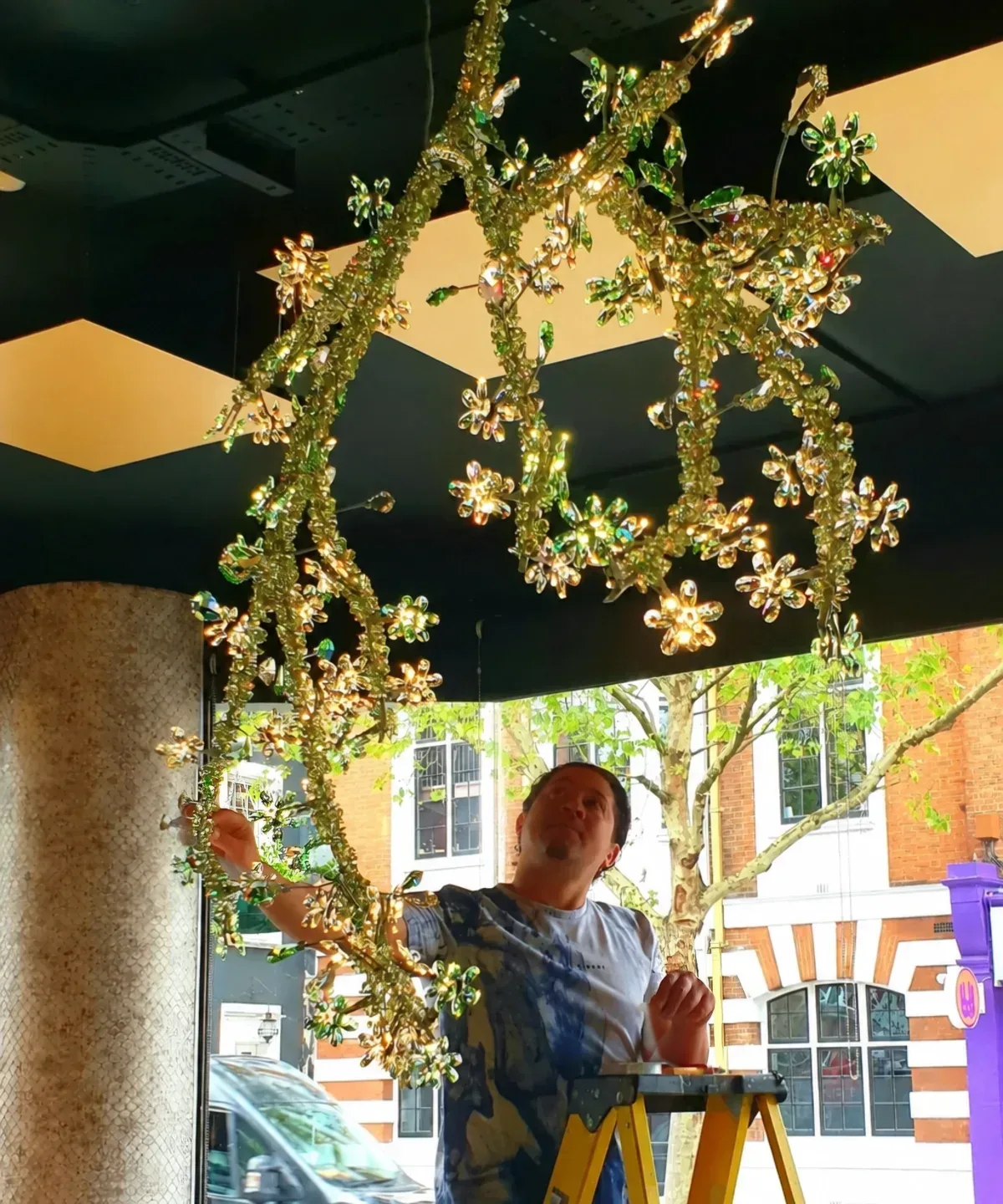
Our chandelier installation services are designed around the fitting, the architecture and the finished room. The objective is a secure, correctly aligned installation that protects both the fixture and the original interior vision.
The designer and property manager’s practical responsibilities
A clear information trail protects the property team as well as the chandelier. The fixture should have an asset record that can be understood by future contractors, facilities teams and conservation specialists.
The file should include:
- Manufacturer, maker or provenance details
- Weight including crystals, lamps, chains and accessories
- Materials, finishes and known areas of fragility
- Dimensions, suspension points and installation height
- Photographs before and after installation
- Ceiling support and reinforcement details
- Electrical and control information
- Approved access method and working restrictions
- Cleaning, repair and replacement-part history
- Maintenance dates, observations and next actions
The access plan is equally important. It should identify how a tower, scaffold or mobile elevated work platform will enter the room, where protective flooring will be placed and how the working area will be separated from guests, residents, staff and other contractors.
Work should be scheduled around occupancy and wider building works. In a hotel, that may mean coordinating with housekeeping, events, reception and bedroom availability. In a private residence, it may involve protecting furniture, artwork, flooring and other completed finishes. In a commercial or historic property, the plan may need to align with decorators, electricians, structural specialists and conservation advisers.
Protecting the original design vision
Specialist care is not simply about making a chandelier look clean. It is about preserving the proportion, balance, finish and character that made the fixture right for the room.
Incorrect handling can result in:
- Scratched or clouded crystal
- Cracked or marked hand-blown glass
- Bent antique arms or historic metalwork
- Tarnished, stripped or over-polished finishes
- Mismatched replacement drops, lamps or fittings
- Distorted alignment after assembly or cleaning
- Loose components caused by unnecessary pressure
Every material requires an appropriate method. Fine crystal should be supported rather than pulled. Murano and hand-blown glass need measured handling because individual pieces may vary in thickness, shape and balance. Antique brass, bronze, gilded or patinated metalwork should not be treated as a standard polished surface.
Our bespoke chandelier care is intended for one-of-a-kind, fragile and historically significant fixtures where the safest method depends on condition, construction and finish.

Installation with safety built into the process
A professional installation begins with a site assessment. The chandelier, ceiling, fixing position, electrical connection, access height and surrounding finishes are reviewed before the work is confirmed.
Where necessary, the ceiling structure is reinforced to provide an appropriate support arrangement. The chandelier is never expected to rely on the electrical cable for mechanical support.
For fixtures above 20 kg, our documented chandelier load testing and safety procedure can include structural load testing at up to 50 per cent above the chandelier’s own weight, subject to the project assessment and support arrangement. The test is carried out with physical test weights before the chandelier is installed, so the decorative fixture itself is not used as the load.
The result is recorded as a documented safety procedure. The record should make clear what was tested, the test load used, the support inspected, any reinforcement completed and the outcome of the assessment.
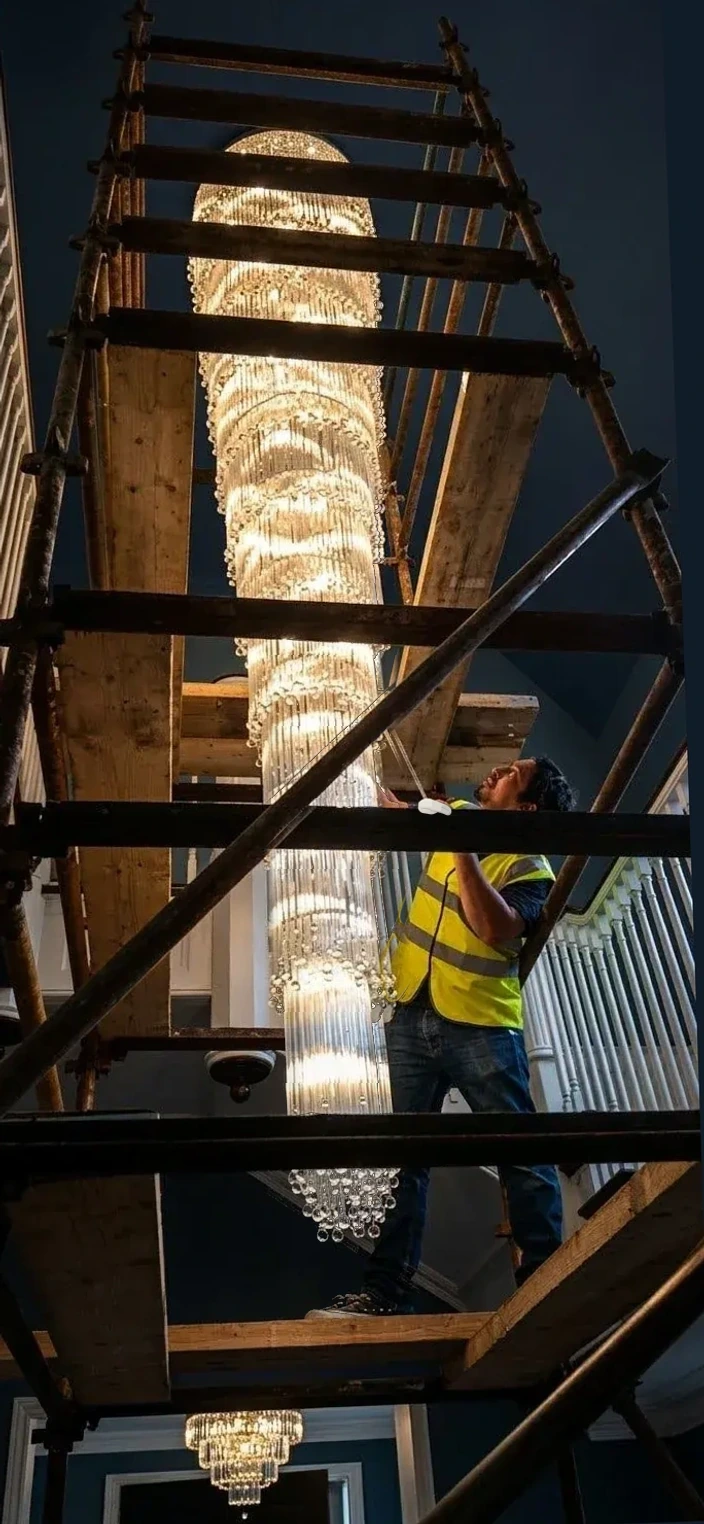
Access planning is also part of responsible installation. Our specialists are PASMA qualified for assembling scaffold towers and carrying out work at height. Where a mobile elevated work platform is the appropriate solution, IPAF-qualified operators and suitable equipment can be included in the access plan.
The approach follows the wider principles set out in the HSE guidance on work at height and should always be supported by a suitable risk assessment, method statement, exclusion zone and rescue plan.
Planned chandelier maintenance protects long-term value
A chandelier is easier to preserve when small changes are recorded early. Planned chandelier maintenance allows the condition of the fixture, suspension, electrical components and finishes to be reviewed before a minor issue becomes a disruptive repair.
A practical starting point for scheduling is:
Private residences and formal rooms
Annual professional inspection and cleaning is often suitable where the room is lightly used and protected from cooking vapours, smoke and heavy dust.
Hotel lobbies, stairwells and reception areas
Six- to twelve-month maintenance intervals may be appropriate, depending on traffic, ceiling height, environmental conditions and the visibility of the fixture to guests.
Restaurants, kitchens and busy hospitality spaces
Three- to six-month visits may be more suitable because grease, airborne deposits and constant activity can affect both appearance and electrical components.
Ballrooms, event venues and function rooms
A pre-season or pre-event check should be scheduled before periods of heavy use. This allows alignment, lamps, visible suspension points and vulnerable glass or crystal elements to be reviewed without last-minute disruption.
Antique and fragile pieces
Antique fixtures may require lighter, more frequent observation but less frequent deep intervention. The correct cycle depends on condition, materials, historic value and the risk of dismantling. A conservation-led approach is preferable to repeated aggressive cleaning.
Schedules should also be reviewed after building works, water ingress, accidental impact, unusual movement, rewiring or changes to the room’s use.
Cleaning, repair and rewiring without unnecessary disruption
Professional cleaning should be coordinated with the property calendar. The team can plan around guests, residents, staff and other trades, using protective measures for floors, furniture and finished surfaces.
A typical visit may include:
- Careful dust and deposit removal
- Delicate cleaning of crystal and glass
- Controlled polishing of suitable metal components
- Lamp and holder checks
- Inspection for loose, cracked or missing elements
- Review of visible wiring and connections
- Alignment and balance observations
- Photographic condition records
- Recommendations for repair or future access
The work area should be left orderly, with protective materials removed and any outstanding issue explained clearly. Where a fitting requires repair or rewiring, the scope should be separated from routine cleaning so that decisions remain documented and the original design is not compromised.
Chandelier cleaning, repair and removal can be coordinated as part of one wider care plan.
Working alongside the wider project team
Specialist chandelier care should complement the work of the architect, designer, main contractor, electrician, structural engineer, decorator and facilities manager.
A well-managed visit includes:
- Advance confirmation of room access
- Protection for floors, furniture and nearby finishes
- Agreed isolation of electrical supply
- Clear working zones and controlled movement
- Coordination with other contractors
- Careful handling and labelled component storage
- Photographs of completed work
- A tidy handover and updated asset record
This reduces disruption while maintaining accountability. It also ensures that the chandelier remains aligned with the design intent after surrounding works are complete.
For relocation, renovation or replacement, careful chandelier removal allows the fitting to be disassembled, protected and documented for storage or transport.
Choose a care partner for the whole life cycle
The strongest results come from treating the chandelier as a long-term asset rather than a one-off installation.
Chandelier Specialist Services provides specialist support for large, delicate and valuable fixtures across luxury homes, hotels, restaurants, ballrooms, offices, event venues and historic properties. The team works with contemporary sculptural designs, classic crystal, hand-blown and Murano glass, antique metalwork and chandeliers of all sizes.
A planned care relationship protects the designer’s vision, supports the property team and helps extend the useful life of the fixture through measured cleaning, safe access, careful maintenance and appropriate documentation.
Enquire to discuss a tailored chandelier care plan for a new installation, an existing property or a wider portfolio of statement lighting.